

Report · April–June 2026
This report presents the results of the Safe Space programme at State Kindergarten No. 355 ‘Yasochka’ in Kyiv — the second state-run kindergarten to join the project.
Implemented with the support of Restart Foundation, in partnership with the Ukrainian NGO Words Help and the Mental Health Centre at the National University of Kyiv-Mohyla Academy (NaUKMA).
Prepared by the project team: Oksana Zaleska (supervisor), Alla Yansons (Chief Executive of Restart Foundation), Yevheniia Zavorotynska (project mentor) and Olena Tkachenko (project supervisor).
The Context
Delivering support amid war
Throughout the spring, Kyiv was under systematic rocket and drone attacks. Air-raid alerts sounded during several sessions — but a spacious, well-equipped shelter meant children could move to safety and the session could continue the same day, without rescheduling. Not every pre-school has that, and it made a real difference here.
The hardest moment came with heavy overnight shelling on 2 June, which left many families too exhausted to attend the final joint session, and some had temporarily left the city after warnings of a massive attack. Even so, parents, children, teachers and psychologists kept working together to hold a safe, supportive space for the children.
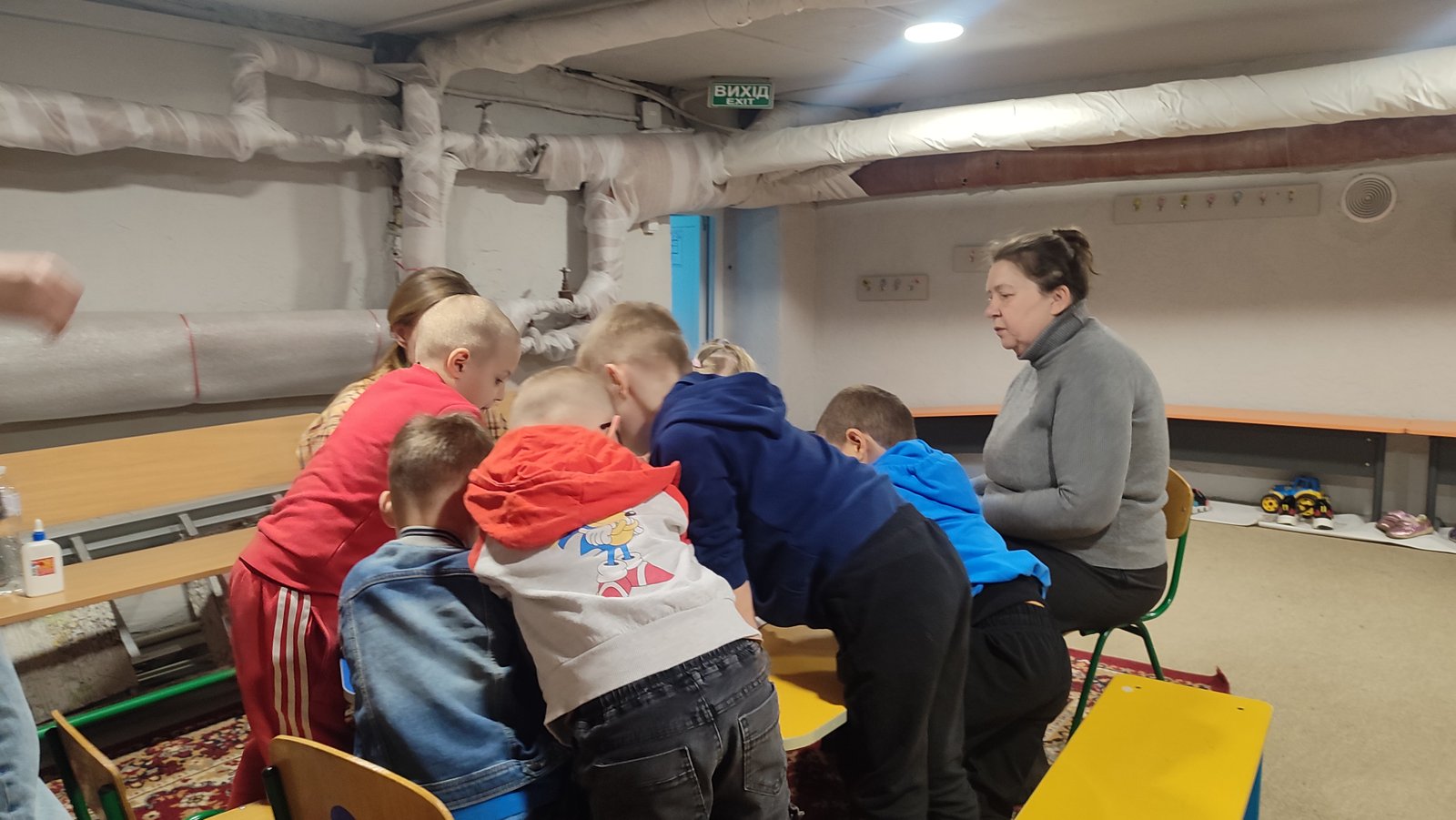
Safe Space sessions continued in the underground shelter during air-raid alerts
About the Programme
A safe space, held every week
The Safe Space programme was developed by the Mental Health Centre at NaUKMA to strengthen children’s resilience and support their emotional wellbeing in wartime. At Kindergarten No. 355 ‘Yasochka’ — the second state-run kindergarten to join the project — three therapeutic groups of 26 pre-school children took part from 1 April to 16 June 2026, through play, creative exercises, movement, sensory materials and work on emotions.
A team of four specialists delivered the programme — supervisor Olena Tkachenko, mentor Yevheniia Zavorotynska, and trainees Valeria Dovhoruk and Olena Kovalevska — working not only with the children, but with the parents, teachers and the kindergarten’s management around them.
Who received support
How the 101 activities divided
| Activity | Number |
|---|---|
| Work with children & parents | |
| Group classes with children | 32 |
| Individual meetings with parents | 14 |
| Referrals of children | 4 |
| Group meetings with parents | 3 |
| Observations of children | 3 |
| Joint sessions for children & parents | 2 |
| Referrals of parents | 1 |
| Professional support | |
| Supervision sessions for trainees | 17 |
| Mentoring discussions with trainees | 12 |
| Resource & methodological meetings with educators | 6 |
| Meetings with the administration | 3 |
| Supervision sessions for educators | 2 |
| Supervision sessions for mentors | 2 |
| Total activities | 101 |
Key Findings
What changed over the programme
Children
Three groups of 26 children moved from needing time to adapt to recognising and naming their emotions, finding safer ways to express anger, and resolving small conflicts themselves. By the end, most felt confident and safe in the group — more open, more cooperative and more attentive to one another.
Parents
Twenty-six parents took part across five joint meetings and fourteen individual family sessions. Wary and weary at first, they grew more open — sharing experiences, using the tools at home, and noticing positive changes in their children.
Teachers
Eight educators built practical skills for supporting children through the effects of war, worked on their own emotional resources, and left with new tools and a clearer sense of why their own wellbeing matters.
Professional capacity
Two trainees, Valeria Dovhoruk and Olena Kovalevska, grew in confidence session by session. Olena will continue her Safe Space training and has secured a kindergarten post; Valeria hopes to take the programme into schools.
“Dima always came home from kindergarten in a good mood, and couldn’t wait to tell us what he’d learned in the sessions.”
Iryna, Dima’s mum
In Conclusion
Holding on to childhood
For most of these children, war has become part of everyday life — night-time shelling, sirens, shelters and a constant sense of danger. The Safe Space programme restored the ordinary foundations of childhood: safe relationships, play, togetherness and predictability. Over the weeks, the children came to trust adults more, spoke more openly, supported one another and found safe ways to cope with fear, sadness, anger and joy.
And because the programme also trains Ukrainian psychologists who keep working long after the sessions end, its impact reaches far beyond one kindergarten — supporting one group of children today, and whole communities tomorrow.
Read the full report
Available in English and Ukrainian (PDF)
