

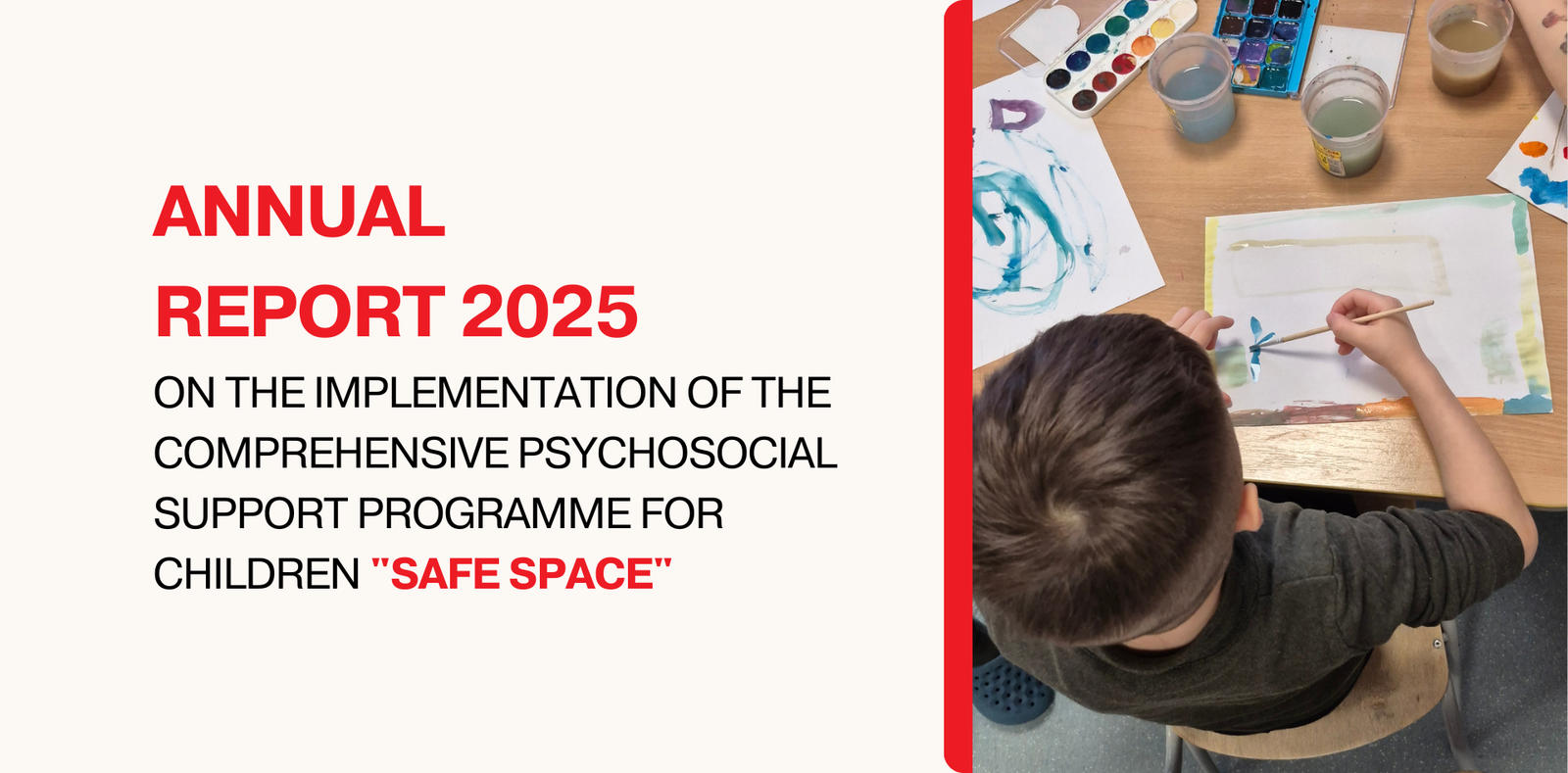
This report was prepared as part of the implementation of the Safe Space psychosocial support programme for preschool children in kindergartens. It presents the key results of the programme, which was implemented in five children’s institutions in Kyiv during 2025. The document covers the experiences of all parties involved: parents, teachers, school administrators, and specialists who directly delivered the sessions.
The initiative was implemented with the support of the Restart Foundation in partnership with the non-governmental organisation ‘Words Help’ and the NaUKMA Mental Health Centre. The report was prepared by the project team: Oksana Zaleska (supervisor), Alla Jansons (CEO of the Restart Foundation), and Lesya Salmon (monitoring and evaluation specialist).
total recipients supported
children reached
activities delivered
kindergartens in Kyiv
Context: a fourth year of war
Ukraine has been facing active hostilities and martial law for the fourth consecutive year. During this time, Ukrainian citizens have experienced dozens of attacks using drones and various types of missiles; tens of thousands of air raid sirens have sounded, with almost 2,000 of them in Kyiv alone. Homes, schools, kindergartens, museums, and theatres have been destroyed — countless buildings and lives have been lost.
For children currently living in Ukraine, this means not only a loss of peace, but also a loss of a happy childhood. Many parents still do not know how to talk to their children about the war. At night, while the children are asleep, parents move them to the bathroom, hallway, or proper shelters to keep them asleep — but this is not always successful.
As of 10 September 2025, at least 14,116 civilian deaths have been documented since February 2022, including 733 children. The number of wounded is 36,481, including 2,285 children. 2025 became truly the most difficult year for the vast majority of Ukrainians — intensified challenges require and continue to require increased support, especially for children and adults with children.
About the project
The Safe Space programme, developed by specialists at the NaUKMA Mental Health Centre, is a comprehensive psychosocial initiative designed to enhance children’s stress resilience, support their emotional health, and develop self-regulation skills in wartime conditions. In 2025, the Safe Space project covered five educational institutions in Kyiv:
La Malyuk
33 children · 33 parents · 16 teachers
Happiness Kids
24 children · 38 parents · 12 teachers
Mandryk
18 children · 35 parents · 2 teachers
I-School
23 children · 40 parents · 4 teachers
MriyDiy
21 children · 28 parents · 1 teacher
The total number of recipients who received assistance is 348. This was the first year the project was implemented without interruption: as soon as work was completed at one institution, it began at another. Teams of more than ten people were involved in implementing the programme throughout the year. Oksana Zaleska was the programme’s permanent supervisor, and Olena Tkachenko and Yevheniia Zavorotynska served as mentors; each kindergarten had two interns.
Types of psychosocial interventions
Key findings
Children
Follow-up monitoring showed significant improvement in two cases: some children with critical anxiety levels moved to borderline levels, and those at borderline levels reached or approached normal levels. Children mastered positive coping strategies and showed increased social interaction.
Parents
Over time, parents began reporting warmer communication, improved sleep in their children, and reduced conflict. A few weeks after the programme ended, results not only consolidated but became part of children’s everyday lives — how they communicate and perceive the world.
Teachers
Additional work with teachers helped children open up and understand the group’s rules, and also allowed teachers to let children simply be children. Educators gained increased confidence and improved understanding of trauma-informed approaches.
Professional capacity
12 specialists were certified as Safe Space trainers for preschool institutions. This creates a sustainable pool of human resources in an environment with a chronic shortage of specialists — a key value of 2025.
“The results of the Safe Space programme are noticeable to those around them, consistent, and intensify over time. This dynamic was observed in all kindergartens.”
Annual Report 2025
Conclusions
2025 showed that supporting children in wartime is effective when it is continuous, systematic, and implemented in the institution’s real-life operations. The programme maintained stability throughout the year and expanded the scope of assistance: supervision for educators and additional professional support for trainees were added.
The key result of the year is not only the individual positive changes, but also the fact that these changes are consolidated and reinforced over time as adults support the child’s new skills in their daily routine. It is this “delayed” dynamic that is important for understanding the programme’s impact and planning next steps.
Thanks to donor support, this work became possible in a year when the need for psychosocial support for children and adults was particularly acute.
Read the full Annual Report 2025
Complete findings, data tables, and conclusions — available as a PDF.
Want to bring Safe Space to your kindergarten?
Learn about the programme, registration, and how to get involved.
