

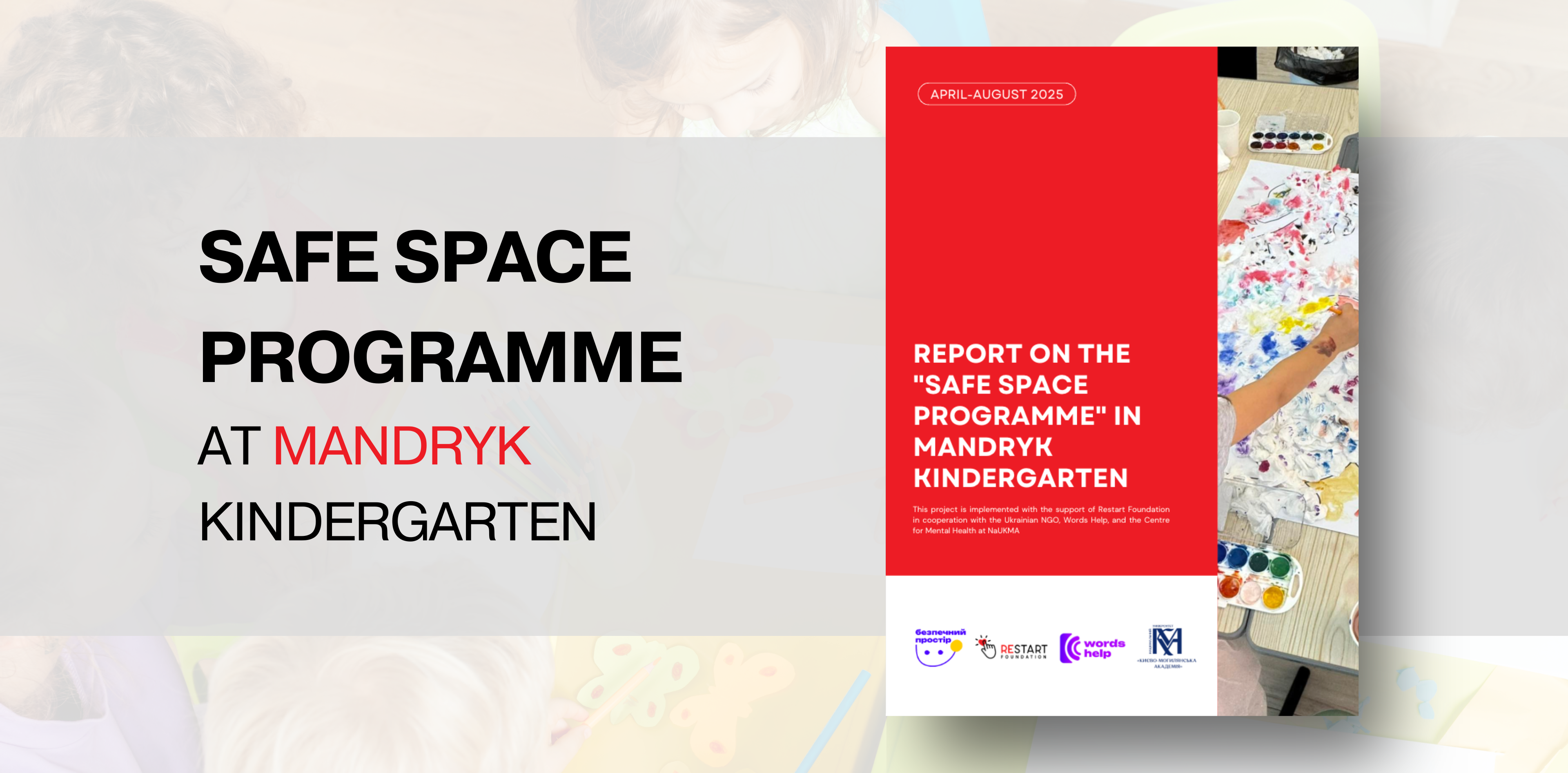
The programme was implemented with the support of Restart Foundation in cooperation with the Ukrainian NGO “Words Help” and the NaUKMA Mental Health Centre. This page summarises the context, activities, and impact of the programme delivered in Kyiv during a period of intense shelling. The full report is available below.
participants total
children
parents
weeks of weekly sessions
War context
Programme delivered during massive weekly missile & drone attacks on Kyiv
Referrals
3 families + 1 educator referred for specialised psychological support
Context: implementing support during active war
From April to August 2025, Kyiv experienced repeated combined missile and drone attacks. In May alone, 3,973 drones were launched; in June — 5,000. Residential buildings were destroyed, civilians were killed, and families spent nights in shelters or corridors. Children arrived at kindergarten after sleepless nights, frightened by explosions and sirens.
In this environment of chronic danger, anxiety, and parental exhaustion, the Safe Space programme aimed to restore stability, emotional regulation, and trust within the child–adult community.
Programme structure
Safe Space is a comprehensive psychosocial model developed by the NaUKMA Mental Health Centre. At Mandryk kindergarten, the programme operated on three levels: children, parents, and teachers, with supervision and intern training as key components.
Children
3 therapeutic groups (6 children each), weekly sessions combining play, creative work, emotional literacy, movement, and structured rituals.
Parents
Psychoeducational and supportive meetings addressing anxiety, war conversations, sleep disturbances, conflict, and emotional fatigue.
Teachers
Supervision sessions, emotional stabilisation, attachment-based approaches, and training on managing challenging behaviour.
Interns
12-session practical training with supervision, case discussions, and professional development.
Reach
Impact & observations
Children
Half of the group showed improvement in emotional regulation; calmer transitions, better peer interaction, increased ability to name emotions.
Parents
Reported warmer communication, improved sleep in children, reduced conflict, greater awareness of how to talk about war honestly and age-appropriately.
Teachers
Increased confidence, reduced countertransference aggression, improved understanding of trauma-informed approaches.
Institution
Programme implemented for the third time; management emphasised its critical value during wartime.
“Safe Space provides not just sessions, but a holistic environment where children feel protected and adults learn how to support them in times of war.”
Conclusions
Despite constant shelling and chronic stress, the Safe Space programme demonstrated positive change in children’s interpersonal behaviour, adult awareness, and institutional resilience. While results were mixed due to extreme external conditions, the model proved effective as a comprehensive system of psychosocial support.
Read the full programme report
Detailed findings, methodology, and recommendations — available as a PDF.
