

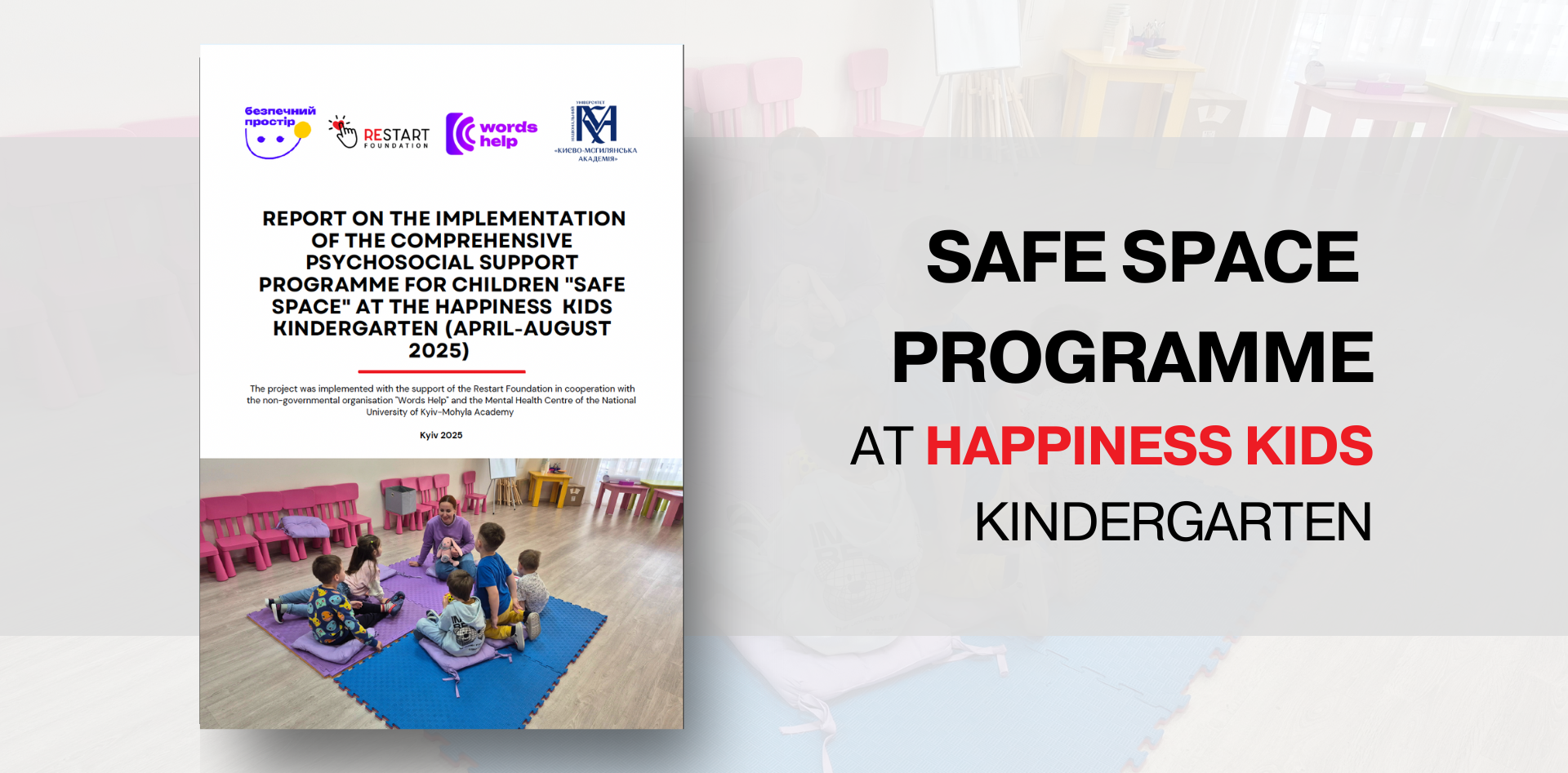
Report on the implementation of the comprehensive psychosocial support programme for children “Safe Space” at the Happiness Kids kindergarten (April–August 2025)
The project was implemented with the support of Restart Foundation in cooperation with the NGO “Words Help” and the Mental Health Centre of the National University of Kyiv-Mohyla Academy. This page summarises the programme’s purpose, how it was conducted, and key changes for children, parents, educators and interns. You can find the full report attached.
Download the full report (PDF)
Why this programme was needed
Between April and August 2025, Kyiv experienced weekly rocket and drone attacks. Nights in shelters, destroyed residential buildings, rising anxiety and caregiver burnout created overwhelming pressure on children and adults. During May alone, 3,973 drones were launched (128 per day); in June — 5,000 (183 per day).
In these circumstances, children struggled with fear, aggression, sleep disturbances, and constant tension. Parents and teachers, also exhausted, often felt unable to support children fully. Safe Space was launched to create a place where children and adults could restore stability, connection and emotional safety.
About the programme
The Safe Space programme, developed by the NaUKMA Mental Health Centre, is a structured psychosocial initiative aimed at strengthening children’s resilience, improving emotional regulation, and supporting caregivers. The programme at Happiness Kids included individual, group and community-level activities.
Activities
- Weekly therapeutic groups for children (3 groups × 12 weeks)
- Group meetings with parents (7 sessions)
- Attachment seminar for entire staff based on “The Ron Clark Story”
- Supervision and mentoring for interns
- Feedback sessions and referrals for specialised help
Project team
- Supervisor — Oksana Zaleska
- Mentor — Olena Tkachenko
- Interns — Svitlana Kosachova, Iryna Zharinova
Reach
| Beneficiaries | Quantity |
|---|---|
| Children | 24 |
| Parents | 38 |
| Educators | 12 |
| Kindergarten directors | 2 |
| Interns | 2 |
Impact
“The children became calmer, more open, more sincere. They learned to talk about fear, anger and joy in ways they never did before.”
